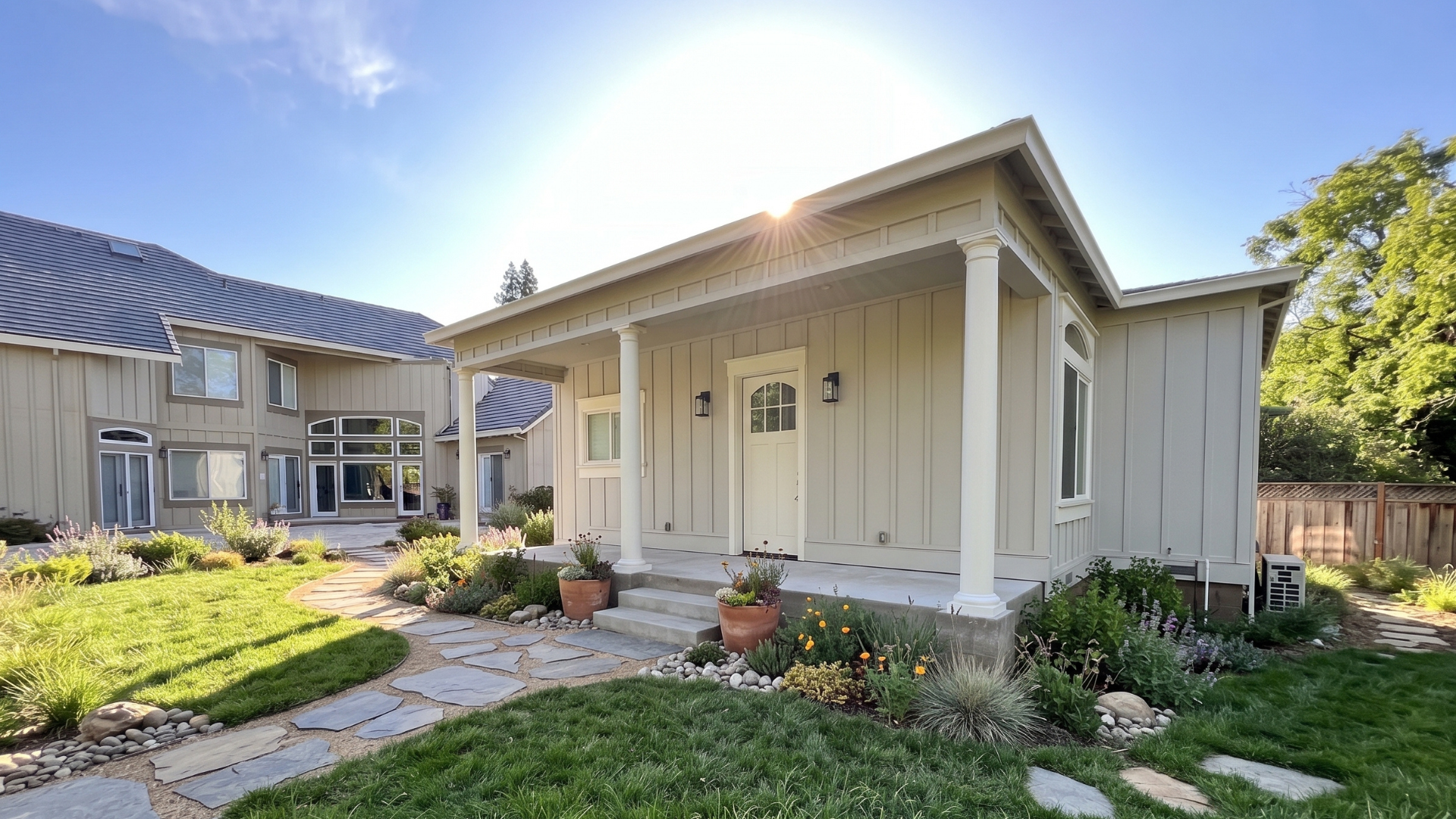
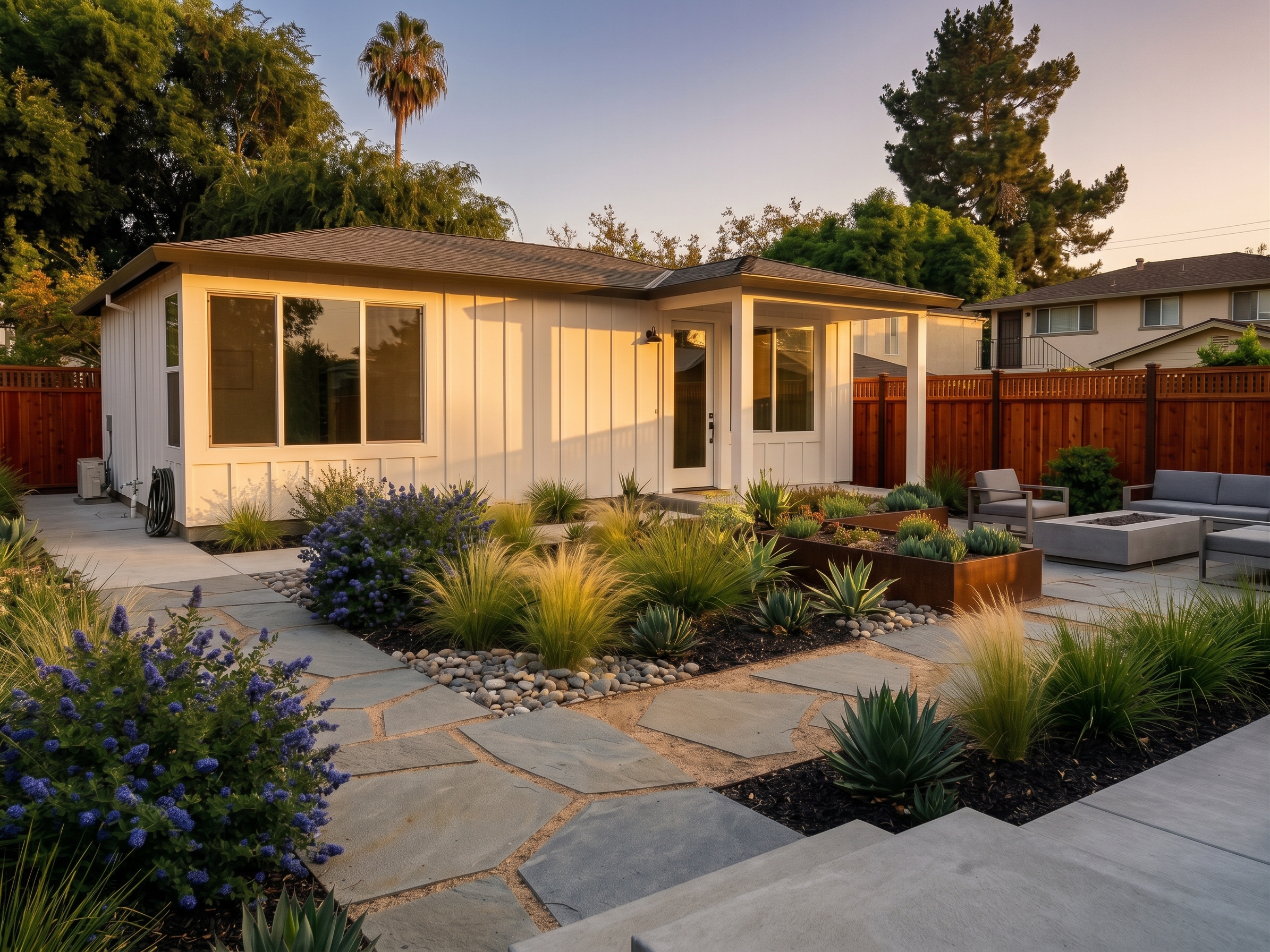
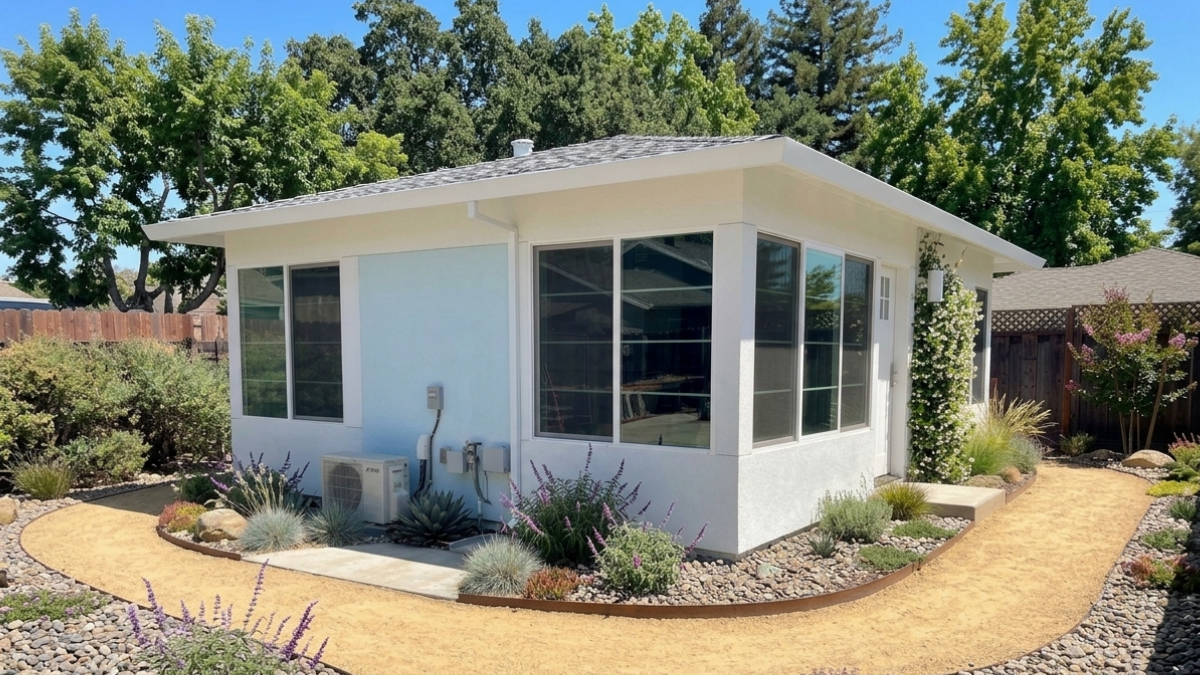
Yes, you can build an ADU in San Jose. A detached ADU can be up to 1,000 sq ft on lots of 9,000 sq ft or less, and 1,200 sq ft on larger lots. A one-story ADU can be 18 ft tall, and side and rear setbacks are 4 ft.
Enter your address to find your property, explore your lot and view the plans that may fit it.
The City of San Jose reviews ADU permits through its Development Services Permit Center. The rules are in Title 20 of the San Jose Municipal Code, the Zoning Code. San Jose runs a Preapproved ADU program with plans from outside designers that the city has already reviewed, which shortens plan check.
San Jose was the first city in California to let ADUs be sold separately as condominiums, starting in July 2024. The city has been updating its ADU rules to match state law, so confirm size and height figures with the city before you design.
Under state law, a single-family lot can combine an ADU converted from existing space, a new detached ADU of up to 800 sq ft and a Junior ADU. Lots with a duplex can also add ADUs.
How big can an ADU be in San Jose?
Up to 1,000 sq ft on lots of 9,000 sq ft or less, and up to 1,200 sq ft on lots over 9,000 sq ft. An ADU does not count toward the floor area ratio that triggers a Single-Family House Permit.
How tall?
A one-story detached ADU can be 18 ft. A two-story ADU can be 24 ft, and the city's zoning update raises that to 25 ft.
Setbacks?
4 ft from the side and rear property lines. The front setback follows the lot's zoning district.
Parking?
None required, according to the city's ADU Universal Checklist (September 2026).
An ADU in San Jose needs a building permit, filed through the city's online permit portal. Expect to provide:
State law gives the city 60 days to approve or deny a complete ADU application. Corrections and resubmittals add time. Preapproved plans move faster.
ADUs are allowed on lots with a legally built single-family home, duplex or multifamily building.
Yes. A detached ADU can be up to 1,000 sq ft on lots of 9,000 sq ft or less and 1,200 sq ft on larger lots, with 4 ft side and rear setbacks.
A real number comes from the whole project, not just the structure: design and engineering, permits and fees, site work such as trenching and sewer and power connections, and finishes. Your lot usually moves the price more than the ADU itself, which is why a feasibility review comes first. In San Jose, local factors include older tract-home electrical panels and sewer laterals, expansive clay soils, impact fees on ADUs of 750 sq ft or more, and expedited permit paths that smaller projects can qualify for. See How much does an ADU cost in California? for how the pieces add up.
Yes. San Jose allows ADU condominium conversions, and approved the first one in California in August 2025. You apply for a condominium conversion of the house and the ADU first.
Yes. The city lists preapproved ADU vendors whose plans move through review faster, including Acton ADU's Manzanita i448.
Yes, for the new ADU. The ADU is assessed as new construction, and the city assigns it an address during the building permit process.
Not for an ADU. Under state law since January 1, 2026, owner occupancy applies only to a Junior ADU that shares a bathroom with the house.
ADU regulations are constantly evolving and may vary by city, county, or even neighborhood. Before starting your project, it’s always best to consult with a trained professional or certified ADU Specialist to ensure your plans align with current local requirements.
ADU rules change often. This page is a general guide to help you get a sense of what may be possible where you live. It is not legal, zoning or permitting advice, it is no substitute for working with a qualified ADU professional, and it is not a promise that any project will be approved. We update these summaries as often as we can, but your city or county has the final say, and its current code always controls. Before you design, budget or build, confirm the requirements for your property with your local planning and building department.