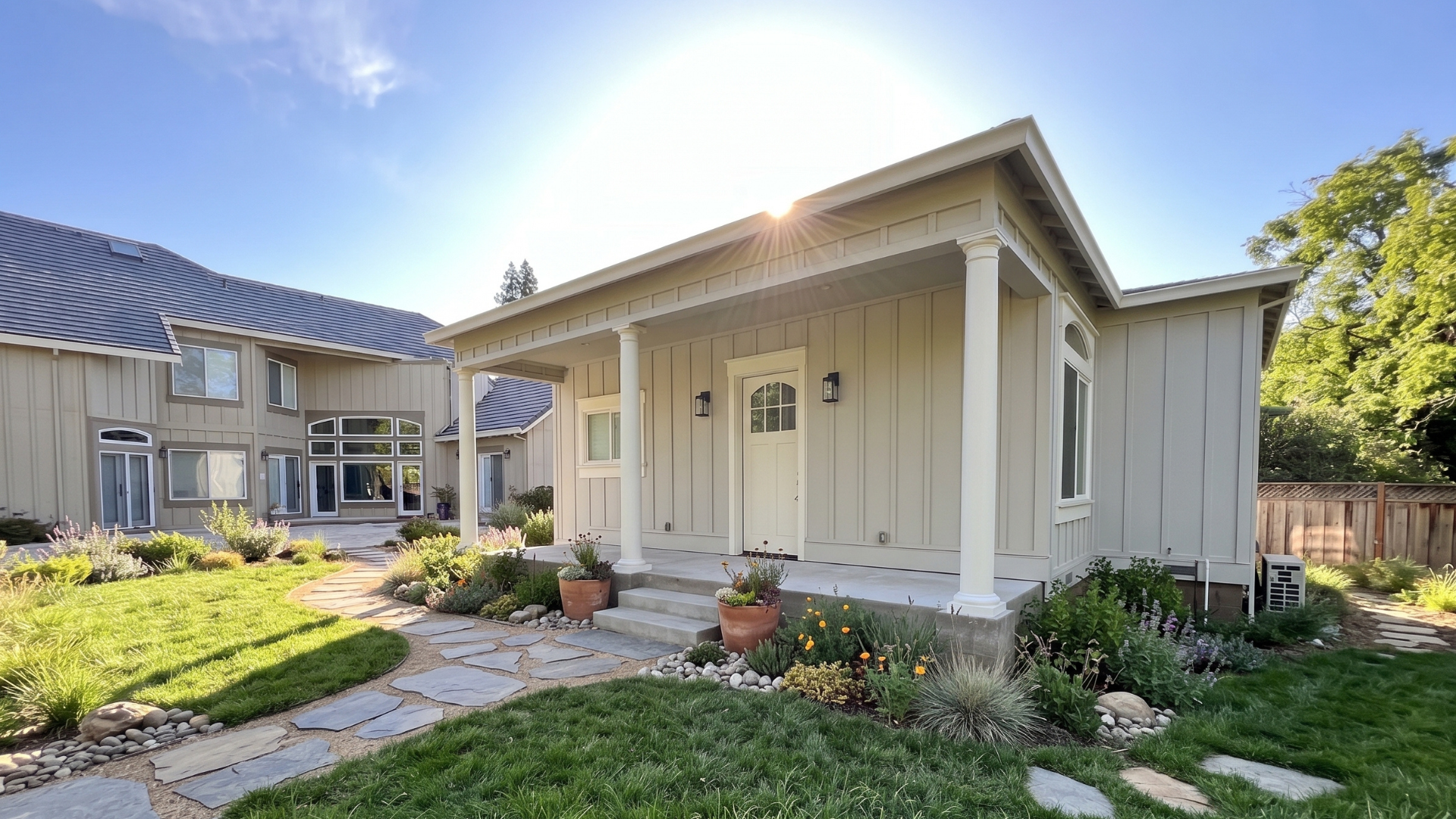
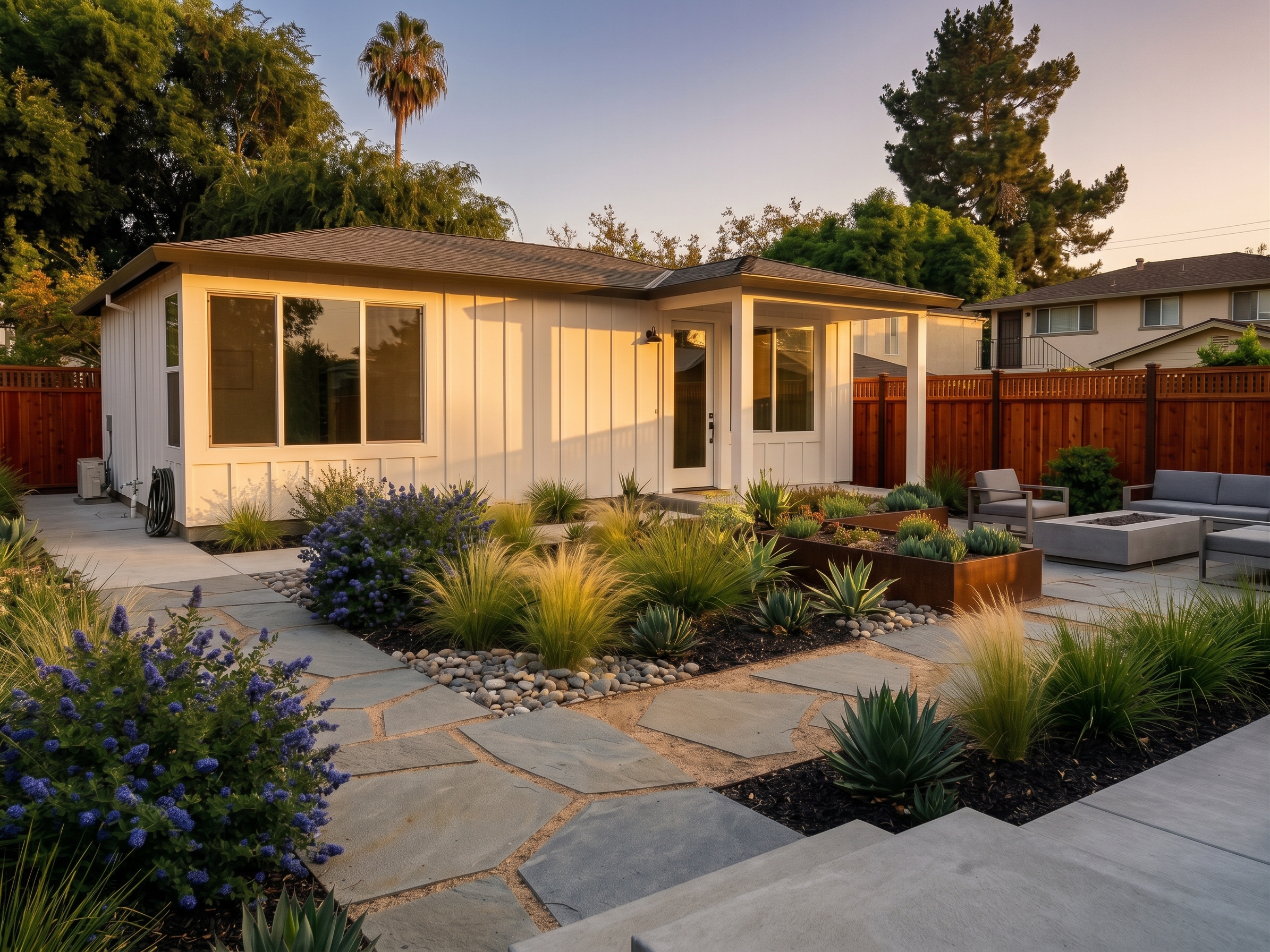
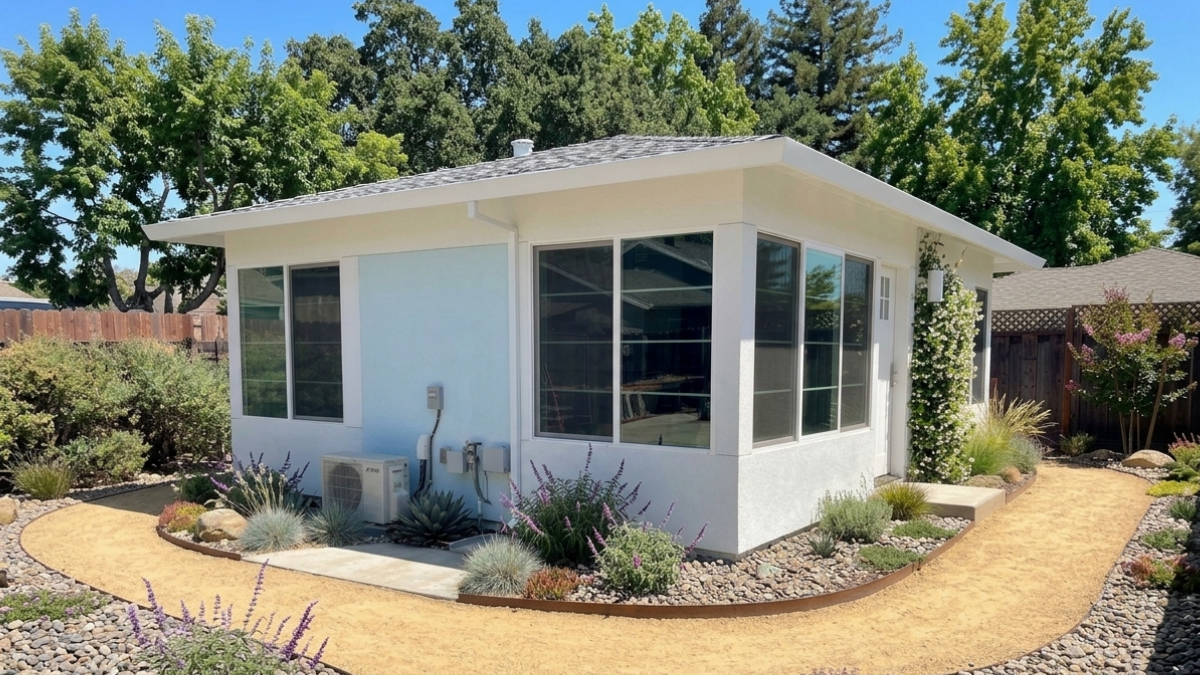
Yes, you can build an ADU in Sunol. Sunol is unincorporated, so Alameda County rules apply: a new detached ADU can be up to 850 square feet with one bedroom, or 1,200 square feet with two or more, 16 feet tall, set 4 feet from the side and rear property lines.
Enter your address to find your property, explore your lot and view the plans that may fit it.
Sunol has no city government. The Alameda County Planning Department reviews ADUs here, against written rules and with no public hearing.
Sunol is rural, with a small town center along Niles Canyon and large agricultural parcels around it. Most properties rely on septic systems, and many on wells, so Environmental Health review often decides what can be built. There is little transit, so plan on one parking space for a new ADU. Larger agricultural parcels can have added county rules, so ask the county what applies to your lot.
Under state law, a single-family lot can combine an ADU converted from existing space, a new detached ADU of up to 800 sq ft and a Junior ADU.
How big can an ADU be in Sunol? A new detached ADU can be up to 850 sq ft with one bedroom or less, or 1,200 sq ft with two or more bedrooms, under Alameda County Ordinance 2026-1. An attached ADU is capped at half the size of the main house, or 850 sq ft with one bedroom and 1,000 sq ft with more, and 850 sq ft is always allowed. Rural Sunol parcels rarely run out of land. The septic system and well usually decide how big the ADU can be.
How tall? 16 ft for a new detached ADU, or 18 ft within half a mile of major transit, plus 2 ft more there to match the roof pitch of the house. An attached ADU can be 25 ft or the zone's limit, whichever is lower. No ADU can be more than two stories.
Setbacks? 4 ft from the side and rear property lines. A new detached ADU sits behind the main house or in the rear half of the lot, and one over 800 sq ft must be 6 ft from other buildings. Conversions keep their existing setbacks.
Parking? One space for a new ADU unless an exemption applies. None for conversions. Sunol has little transit, so plan for the space.
You need a building permit from Alameda County. The Planning Department checks the zoning rules as part of that review. Lots on septic or a well need Environmental Health sign-off.
State law gives the county 60 days to approve or deny a complete ADU application. Septic and well reviews add time.
Any Sunol lot zoned for a house can have an ADU, as long as a legal home exists or is proposed.
Yes. Any lot zoned for a house can have an ADU, as long as a legal home exists or is proposed.
A real number comes from the whole project, not just the structure: design and engineering, permits and fees, site work such as trenching and sewer and power connections, and finishes. Your lot usually moves the price more than the ADU itself, which is why a feasibility review comes first. In Sunol, local factors include septic upgrades, well capacity, and long utility runs on rural parcels. See How much does an ADU cost in California? for how the pieces add up.
It depends. County Environmental Health reviews septic and well capacity.
Up to 1,200 sq ft with two or more bedrooms, if septic and water allow.
Usually one space, since there is little transit. None for conversions or Junior ADUs.
Not for an ADU. Under state law since January 1, 2026, owner occupancy applies only to a Junior ADU that shares a bathroom with the house.
ADU regulations are constantly evolving and may vary by city, county, or even neighborhood. Before starting your project, it’s always best to consult with a trained professional or certified ADU Specialist to ensure your plans align with current local requirements.
ADU rules change often. This page is a general guide to help you get a sense of what may be possible where you live. It is not legal, zoning or permitting advice, it is no substitute for working with a qualified ADU professional, and it is not a promise that any project will be approved. We update these summaries as often as we can, but your city or county has the final say, and its current code always controls. Before you design, budget or build, confirm the requirements for your property with your local planning and building department.